
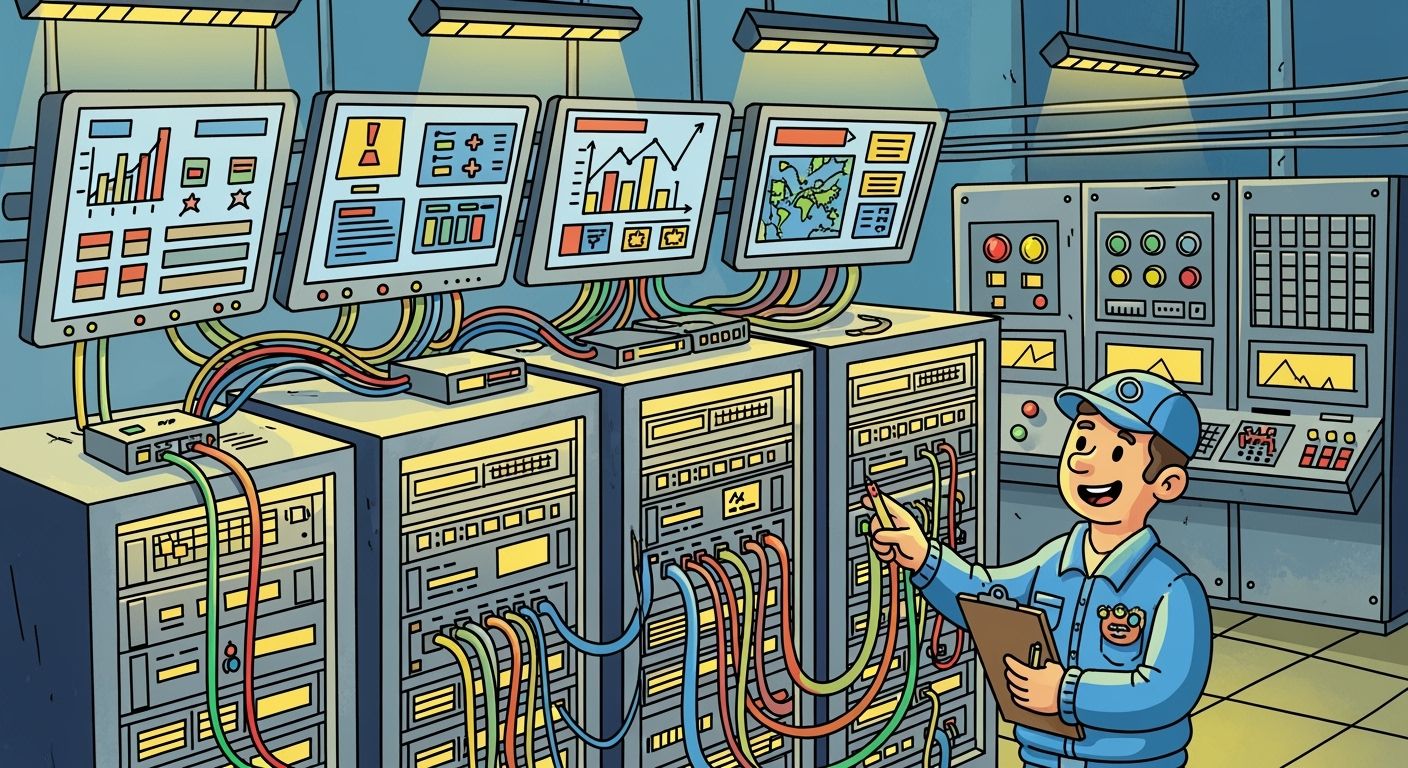
Data centers and critical infrastructure sites require dependable outdoor lighting to support continuous operation, perimeter security, vehicle access, and emergency response. Entrances, internal roads, security checkpoints, equipment yards, parking areas, loading zones, and perimeter fences each require a different lighting approach.
These facilities must maintain high visibility without creating excessive glare, light spill, or interference with CCTV systems. Outdoor lighting design should therefore coordinate LED luminaires, pole positions, optical distribution, security cameras, access-control equipment, backup power, and centralized monitoring.
A project-specific lighting plan helps operators improve security, reduce unnecessary energy consumption, simplify maintenance, and maintain reliable performance during normal operation and grid interruptions.
Key Takeaways
- Divide the site into entrances, access roads, security checkpoints, parking areas, equipment yards, loading areas, and perimeter zones.
- Use full-cutoff LED street lights with suitable optics to control glare and light spill.
- Coordinate lighting positions with CCTV cameras, barriers, fences, access-control systems, and emergency routes.
- Consider engineered smart poles when cameras, sensors, communication equipment, or environmental monitors must share the same structure.
- Evaluate solar street lighting systems for remote perimeter roads and areas where electrical trenching is difficult.
- Base pole height, spacing, foundations, wind resistance, and fixture output on site-specific calculations rather than standard configurations.
Part1: Application Scenarios
1.1 Data Center Zones
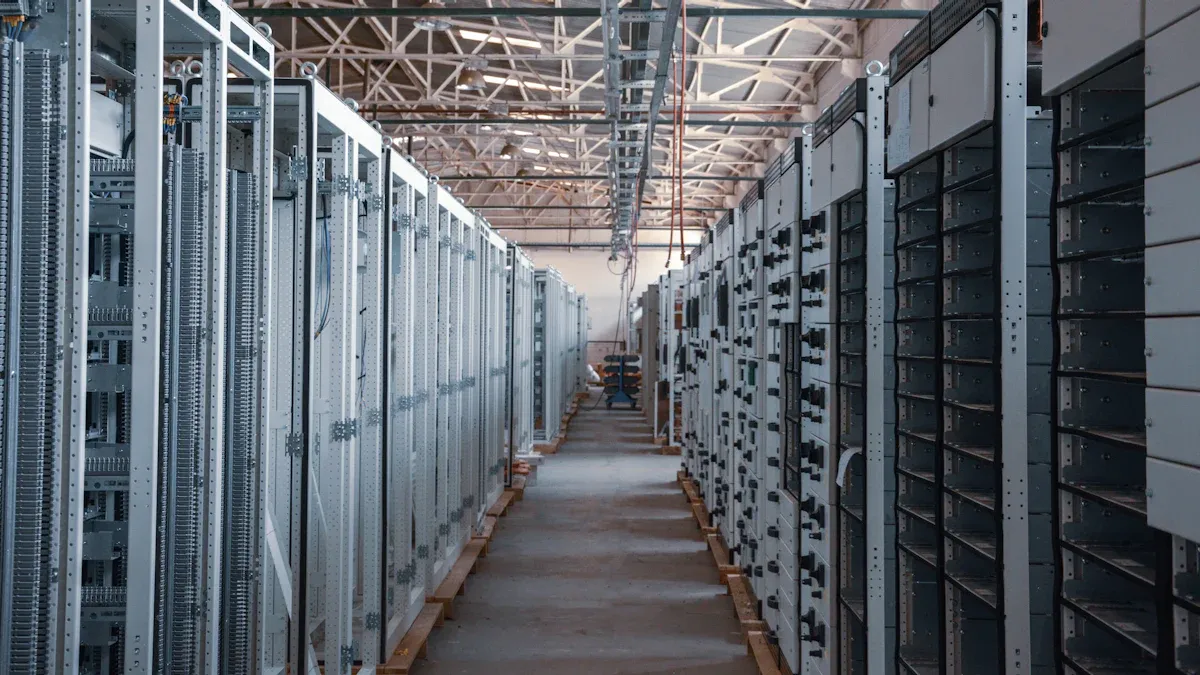
You encounter several distinct zones within a data center, each with unique lighting demands. Server rooms require uniform, glare-free illumination to help you perform equipment checks and maintenance safely. Corridors and access aisles need clear visibility to support quick movement and emergency egress. Utility areas, such as battery rooms and HVAC spaces, demand robust lighting to ensure operational safety and compliance.
Table: Common Lighting Challenges in Data Center Zones
| Lighting Challenge | Impact on Operational Performance |
|---|---|
| Inefficient Lighting Design | Increases energy costs and compromises equipment safety. |
| Heat Generation from Traditional Fixtures | Forces cooling systems to work harder, raising HVAC costs by 2-3%. |
| Need for Redundancy and Emergency Compliance | Ensures partial visibility during failures, supporting operational continuity. |
Traditional lighting fixtures generate significant waste heat, which increases the cooling load on your infrastructure. When you install LED fixtures, you reduce this heat output and immediately lower cooling demand. Splitting lighting across multiple independent circuits helps you maintain visibility and safety, even if a circuit fails.
1.2 Infrastructure Site Areas
Critical infrastructure sites extend beyond data centers. You must address specialized lighting needs for roadways, walkways, bridges, tunnels, and parking garages. These areas require adaptable lighting to ensure safety and energy efficiency. Platforms, car parks, tunnels, footbridges, and station forecourts also benefit from targeted lighting to improve visibility and enhance safety, especially at night.
- Stand-alone solar-powered systems offer robustness and rapid recovery, making them ideal for critical infrastructure.
- You can deploy LED street lights and solar street lights to meet the demands of outdoor environments, considering site-specific factors such as wind load, soil conditions, and local standards.
1.3 Functional Lighting Needs
You must match lighting solutions to the function of each area. In technical zones, prioritize uniform light distribution and redundancy to support mission-critical operations. Outdoor areas need durable, weather-resistant fixtures, such as integrated solar street lights, to withstand environmental challenges. Emergency pathways require reliable backup lighting to ensure safe evacuation. Always determine configuration parameters based on site conditions, lighting calculations, and compliance with relevant standards.
Part2: Lighting Requirements
2.1 Safety and Visibility
You need bright, adaptable, and dependable lighting to support mission-critical operations in data centers and critical infrastructure sites. Proper lighting helps you avoid hazards, perform maintenance, and access equipment quickly. Uniform light distribution reduces shadows and glare, which can cause distractions or hide obstacles. You should also consider motion sensing and occupancy controls to improve safety and resource management.
Tip: Always design lighting layouts to cover both cold and hot aisles, ensuring consistent visibility across all operational zones.
| Lighting Standard | Description |
|---|---|
| Uniform light distribution | Ensures consistent lighting across cold and hot aisles to enhance visibility and safety. |
| Minimal glare or shadow zones | Reduces distractions and improves visibility over racks and cabinets. |
| Motion sensing and occupancy controls | Enhances resource management and energy efficiency by adjusting lighting based on presence. |
| Integrated emergency and egress lighting | Essential for safety, ensuring visibility during emergencies and power outages. |
| Compatibility with raised floors and overhead trays | Facilitates effective lighting design in complex data center layouts. |
You should always match lighting design to the unique layout of your facility. This approach helps you maintain high safety standards and operational efficiency.
2.2 Energy Efficiency
Energy efficiency remains a top priority for modern Lighting Solutions. You can reduce operational costs and environmental impact by following these best practices:
- Plan lighting placement using advanced software to simulate illumination and power consumption for optimal results.
- Align lighting with aisles between rows to maximize illumination.
- Implement automation to turn off or dim lights when no personnel are present.
- Utilize LED lighting to decrease power usage and heat production, which also reduces cooling costs.
| Metric | Traditional Lighting (W/Ft²) | Energy-Efficient Lighting (W/Ft²) |
|---|---|---|
| Power Density | 0.6 – 1.0 | 0.1 – 0.3 |
| HVAC Energy Savings (real-world) | N/A | Upwards of 30% |
You can see that energy-efficient Lighting Solutions, such as LED street lights and integrated solar street lights, significantly lower power density and reduce the load on HVAC systems. This approach supports your sustainability goals and helps you meet regulatory requirements.
2.3 Reliability and Uptime
You must ensure that your lighting systems remain reliable during both normal operations and emergencies. Reliable Lighting Solutions provide continuous illumination, even during power outages, which is essential for safety and operational continuity.
| Feature | Description |
|---|---|
| Reliability | Rugged and highly dependable for mission-critical applications |
| Cost Savings | Equivalent to two full-time employees and over $150K in material costs |
| Functionality | Provides powerful lighting during operations and outages, ensuring safety |
| Feature | Description |
|---|---|
| Backup Duration | 8 to 10 hours of battery backup followed by up to 30 days of generator support |
| Application | Supports emergency operations, accident response, and maintenance in remote utility sites and substations |
| Importance | Ensures operational continuity during power outages, allowing time to manage outages effectively |
- Emergency lighting maintains visibility for at least 90 minutes during power failures.
- It aids in safe evacuation by illuminating exits and emergency signage.
- Critical areas like operating rooms and data centers remain operational, ensuring life safety and continuity.
You should always select lighting products that offer robust backup options, such as battery and generator support, to guarantee uninterrupted operations.
2.4 Compliance Standards
Compliance with safety and performance standards is mandatory for all Lighting Solutions in data centers and critical infrastructure. You must follow regulations such as OSHA and NFPA 101 to avoid fines and ensure safe working conditions.
| Compliance Standard | Requirement Description |
|---|---|
| OSHA | Minimum of 1.0 foot-candle along egress paths during normal operation; drops to 0.6 foot-candles during power loss; max-to-min uniformity ratio capped at 40:1. Emergency lighting must activate within 10 seconds and last at least 90 minutes. Non-compliance fines average $15,000. |
| NFPA 101 | Classifies datacenters as special-purpose industrial occupancies; egress paths must remain continuous and unobstructed; electromagnetic locks must unlock during power loss or fire alarm activation. |
- Regulatory compliance standards dictate safety, performance, and environmental considerations in lighting design.
- Engineers must select fixtures that meet specific safety standards, especially in hazardous environments.
- Compliance involves extensive testing and validation of all components to ensure they work harmoniously and meet regulatory standards.
- Thorough specification and documentation of wiring products to ensure clarity and compliance.
- Collaboration with manufacturers and suppliers for access to compliance data and product insights.
- Implementation of rigorous testing and inspection procedures to verify compliance during installation.
You should always consult local codes and standards before selecting or installing lighting systems. This approach ensures your project meets all legal and safety requirements.
Part3: Lighting Solutions and Product Selection
3.1 LED Lighting Solutions
You gain significant advantages when you choose LED street lights for data centers and critical infrastructure sites. LED technology delivers high energy efficiency, reducing energy use by up to 65%. This leads to lower operating costs and a smaller carbon footprint. LEDs also offer superior longevity, with expected lifespans of 50,000 to 100,000 hours. You minimize maintenance disruptions and improve operational reliability.
Tip: LED fixtures provide flicker-free illumination and low heat generation. This helps you maintain temperature control and enhances visual acuity for safer working conditions.
| Advantage | Description |
|---|---|
| Energy Efficiency | LED technology reduces energy use by up to 65%, lowering costs and environmental impact. |
| Longevity | LEDs last 50,000–100,000 hours, minimizing replacements and maintenance. |
| Superior Light Quality | Flicker-free, low heat output, supports temperature control and safety. |
| Enhanced Visual Acuity | Improves color perception and working conditions. |
You also benefit from reduced cooling demand, as LEDs generate less waste heat compared to traditional fixtures. Facilities that switch to LEDs achieve energy reductions of 50–80%, which supports sustainability targets and compliance with standards such as IEC 62722 and IES LM-80.
| Lighting Type | Lifespan (Hours) | Replacement Frequency | Maintenance Burden |
|---|---|---|---|
| Traditional Lighting | 1,000–2,000 | ~25 times more | High |
| LED Lighting | 25,000–50,000 | Less frequent | Low |
Routine maintenance for traditional lighting can lead to significant costs, including labor and productivity losses. LEDs gradually dim, giving you advance notice for replacements and reducing unexpected downtime. The total cost of ownership favors LEDs due to lower energy consumption and reduced maintenance needs.
3.2 Solar Lighting Solutions
Solar street lights and integrated solar street lights offer robust Lighting Solutions for outdoor infrastructure. You eliminate monthly electrical bills and reduce installation costs by avoiding trenching and extensive wiring. Solar lighting solutions provide reliable performance across pathways, parking lots, and roadways.
| Application Area | Wattage Range (Watts) | Lumen Output Range (Lumens) |
|---|---|---|
| Pathways and Pedestrian Areas | 5–10 | 300–600 |
| Parking Lots and Public Parks | 15–30 | 1000–3000 |
| Streets and Roadways | 30–60 | 3000–6000 |
- Low wattage reduces energy consumption and extends battery life.
- High lumens ensure optimal lighting performance.
- Luminous efficacy, measured in lumens per watt (lm/W), indicates higher efficiency.
You achieve a return on investment within 3 to 5 years, depending on local utility rates. Solar lighting solutions require less maintenance and deliver long-term cost advantages. The installation of solar lighting at New Melle Lakes Park in Missouri improved safety and reduced operational costs by avoiding electrical trenching.
Note: Assess fixture durability, battery performance, and visibility expectations regularly to optimize system longevity and reliability. Reference standards such as IEC 61215 for photovoltaic modules and ISO 14001 for environmental management.
3.3 Smart Controls and Sensors
Smart poles and advanced controls transform Lighting Solutions by integrating sensors and automation. You can connect lighting systems with building management systems (BMS), HVAC, and security for streamlined operations. Smart lighting strategies adjust illumination based on occupancy and natural light, optimizing energy use.
| Benefit | Description |
|---|---|
| Energy Optimization | Systems adjust based on occupancy and daylight, saving energy. |
| Improved Comfort | Automated adjustments maintain optimal lighting conditions. |
| Streamlined Management | Integration with BMS allows centralized control and monitoring. |
- Smart lighting systems automatically adjust based on occupancy and time of day.
- Integration with HVAC and security systems creates a responsive management ecosystem.
- You reduce energy consumption and improve operational efficiency.
3.4 Light Pole Selection
You must select the right light pole for each project. The height of the pole determines light distribution. Taller poles cover wider spaces and improve visibility for pedestrians and drivers. Material selection impacts durability and installation height. Steel poles offer strength and support for taller installations. Aluminum poles are lighter but may not withstand extreme weather as well.
Alert: Always consider safety. Higher poles improve visibility but must minimize risks from falling debris. Reference standards such as IEC 60598 for luminaire safety and ISO 1461 for hot-dip galvanized coatings.
| Pole Material | Durability | Height Capacity | Weather Resistance |
|---|---|---|---|
| Steel | High | Tall | Excellent |
| Aluminum | Moderate | Medium | Good |
You must determine pole height and material based on site conditions, lighting calculations, wind load, soil, climate, and local standards.
3.5 Key Configuration Parameters
You need to evaluate site conditions before finalizing configuration parameters for Lighting Solutions. Wind loads and seismic forces influence design and material selection. Proper foundation design ensures stability against environmental forces. Soil conditions and load requirements affect installation and longevity.
- Corrosion-resistant materials extend pole life and reduce maintenance costs.
- Lifecycle considerations, including sustainability and recyclability, are important for long-term planning.
- You must reference authoritative standards such as IEC 61439 for electrical assemblies and IES RP-8 for roadway lighting.
Callout: Parameters must be determined based on site-specific factors. Avoid fixed values for all projects. Use lighting calculations, wind load analysis, and compliance with local standards to guide your decisions.
You ensure reliable, efficient, and compliant Lighting Solutions by following these best practices and referencing authoritative standards.
Part4: Installation and Standards
4.1 Site Assessment
You must start every lighting project with a thorough site assessment. This process helps you identify environmental factors that impact installation and long-term performance. Soil conditions, wind loads, and weather patterns influence the choice of light pole material and foundation design. Temperature extremes affect startup time and efficiency, especially for LED street lights in cold climates. Moisture exposure can cause corrosion if fixtures lack proper sealing or corrosion-resistant materials. Dust accumulation leads to overheating, while harsh chemicals degrade housings and internal components.
| Environmental Factor | Impact on Lighting Performance |
|---|---|
| Temperature Extremes | Affects startup time and efficiency, especially in cold environments. |
| Moisture Exposure | Can lead to corrosion if fixtures are not properly sealed or made from corrosion-resistant materials. |
| Dust | Accumulates on fixtures, creating insulation that can cause overheating. |
| Harsh Chemicals | Degrades housings and internal components over time. |
| Impact Resistance | Essential for fixtures in areas like sports fields to prevent safety hazards. |
You should use tools like the Data Center Electrical Power Chain Assessment Tool to input site data and receive recommendations for energy-efficiency gains. For best results, install energy-efficient lamps and ballasts, occupancy sensors, and effective lighting controls.
4.2 Installation Best Practices
You need to follow best practices to ensure safety and compliance during installation. Regular testing of emergency lighting under load is essential. You must use lighting systems that handle voltage variations to maintain safety in mission-critical environments. OSHA-compliant jobsite lighting solutions reduce accident risks and improve production timelines. Advanced lighting technologies, such as integrated solar street lights, support worker focus and morale.
| Best Practice | Description |
|---|---|
| Emergency Lighting Testing | Regular testing ensures lights function correctly during power outages. |
| Voltage Stability | Lighting systems must handle voltage variations for safety and reliability. |
| OSHA Compliance | Jobsite lighting solutions must meet OSHA standards to reduce risks and improve timelines. |
| Advanced Lighting Technologies | Modern lighting technologies enhance industrial management and worker focus. |
Tip: Always reference authoritative standards such as IEC 60598 for luminaire safety and IES RP-8 for roadway lighting design.
4.3 Codes and Acceptance
You must comply with local and international codes to achieve acceptance for your lighting project. Standards from organizations like ISO, CIE, AASHTO, and FHWA guide installation requirements and acceptance criteria. You need to document wiring products, collaborate with manufacturers for compliance data, and implement rigorous testing procedures.
| Acceptance Criteria | Requirement Description |
|---|---|
| Regulatory Compliance | Fixtures must meet safety and performance standards for hazardous environments. |
| Documentation | Clear specification and documentation of wiring products is required. |
| Testing and Inspection | Rigorous procedures verify compliance during installation. |
Always consult local codes and standards before selecting or installing lighting systems. This approach ensures your project meets legal and safety requirements.
Part5: Procurement and Maintenance
5.1 Procurement Considerations
You must select lighting vendors with care to ensure project success. Compliance with federal funding requirements, such as Buy America and BABA, is essential. You need tailored lighting solutions for each area, including general illumination for rack aisles, task lighting for repair zones, and emergency egress lighting for perimeter security. The procurement process should remain flexible to handle budget cycles and unexpected system failures.
| Procurement Checklist | Description |
|---|---|
| Compliance Verification | Confirm adherence to federal and local regulations. |
| Customization Options | Assess ability to provide project-specific configurations. |
| Documentation and Packaging | Review technical documentation and packaging standards. |
| Ongoing Support | Ensure vendor offers post-installation assistance. |
| Delivery Stability | Evaluate reliability of supply chain and delivery timelines. |
LeapPole supports you with custom street lighting solutions, robust documentation, and quality packaging.
5.2 Maintenance Planning
You improve reliability and reduce costs by planning maintenance for lighting systems. Regular inspections and predictive maintenance help you avoid unexpected breakdowns and extend equipment life. Structured maintenance programs enhance safety and energy efficiency.
| Benefit | Description |
|---|---|
| Reduces Downtime | Identifies issues early and prevents costly failures. |
| Extends Lifecycle | Keeps equipment running efficiently and delays replacements. |
| Minimizes Unexpected Breakdowns | Uses inspections and predictive technologies to avoid failures. |
| Improves Safety | Mitigates hazards such as electrical faults and gas leaks. |
| Enhances Energy Efficiency | Maintains optimal performance and reduces utility costs. |
| Supports Budgeting | Allows accurate cost predictions and avoids unexpected expenses. |
5.3 Lifecycle Cost Analysis
You must analyze lifecycle costs to make informed decisions. Consider initial investment, maintenance, energy consumption, and replacement intervals. LED street lights and solar street lights offer lower operating costs and longer lifespans. You achieve savings by selecting durable materials and efficient systems. Parameters must be determined based on site conditions, lighting calculations, wind load, soil, climate, and local standards.
Tip: Use lifecycle cost analysis tools to compare options and optimize your budget.
5.4 Engineering Support
You benefit from engineering support throughout your project. Specialized partners like LeapPole provide manufacturing experience, customization capability, and project consultation. You receive assistance with design, installation, and compliance documentation. LeapPole considers local conditions to tailor solutions for optimal performance.
| Aspect | Importance |
|---|---|
| Manufacturing Experience | Affects project timeline and reliability. |
| Customization Capability | Tailors solutions to specific project needs. |
| Project Support | Reduces risk from design to installation. |
| Delivery Stability | Ensures timely completion. |
| Certifications | Validates product quality and safety. |
| Warranty and After-Sales | Provides assurance and support post-installation. |
Part6: Case Studies
6.1 Data Center Lighting Upgrade
You can see the impact of a lighting upgrade in a recent data center project. The facility replaced outdated fluorescent fixtures with high-efficiency LED street lights. The engineering team selected fixtures based on site-specific lighting calculations and compliance with IES LM-80. The new system provided uniform illumination across server aisles and reduced glare. You benefit from lower energy consumption and less heat output, which eases the load on cooling systems. The upgrade also included motion sensors for aisles, which improved energy savings during low-occupancy periods. Maintenance teams reported fewer disruptions due to the longer lifespan of LEDs.
6.2 Infrastructure Solar Retrofit
A municipal client needed to improve safety in an industrial park with minimal disruption to daily operations. You can achieve similar results by retrofitting with solar street lights for industrial parks. The project team installed all-in-one solar street lights, which required no trenching or complex wiring. The team selected pole heights and fixture wattages after analyzing wind load, soil conditions, and local climate. The solar lighting system delivered reliable performance, even during power outages. The client reported a reduction in operating costs and improved visibility for both vehicles and pedestrians.
6.3 Best Practices
You should always tailor lighting solutions to the unique requirements of each site. Start with a thorough assessment of environmental factors and operational needs. Select products that meet recognized standards, such as IEC 60598 for luminaire safety. Use lighting calculations to determine the best configuration for your project. Integrate smart controls and sensors to optimize energy use and support maintenance planning.
Tip: Document all design decisions and reference authoritative standards to ensure compliance and long-term reliability.
You gain the most value by focusing on quality, compliance, and adaptability in every lighting project.
You need to select Lighting Solutions that match your site’s unique needs, focusing on tailored products, compliance, and long-term reliability. Start with a thorough site assessment and prioritize energy efficiency. Integrate smart controls and motion sensors to optimize performance. The table below highlights practical steps from recent projects:
| Recommendation | Description | Impact |
|---|---|---|
| Upgrade to LED fixtures | Reduces heat output and cooling costs | 8–12% less cooling energy used |
| Integrate lighting controls | Automates schedules for efficiency | 10–20% energy savings |
| Implement motion sensors | Optimizes lighting based on occupancy | 70–85% less lighting energy consumed |
| Combine lighting and cooling | Uses lighting data to manage cooling | Extends equipment lifespan |
You can consult experienced partners for engineering support and explore custom street lighting solution for your next project.
FAQ
How do you select the right light pole for a data center or critical infrastructure site?
Evaluate the mounting height, luminaire weight, camera and sensor loads, effective projected area, local wind speed, soil conditions, corrosion environment, and maintenance access.
A pole carrying only a luminaire has different structural requirements from one supporting cameras, wireless equipment, speakers, or access-control devices. Use project-specific structural calculations and select suitable street light poles based on the complete equipment load.
What factors influence LED street light configuration?
Configuration depends on road width, vehicle and pedestrian activity, mounting height, fixture optics, required illuminance, uniformity, glare limits, CCTV performance, and surrounding properties.
Photometric calculations should use the exact luminaire IES file. IES LM-80 relates to LED package lumen-maintenance testing; it does not determine pole spacing or site illumination. Lighting layouts should instead be verified through project-specific photometric simulations and applicable outdoor-lighting standards.
How do you coordinate outdoor lighting with CCTV security systems?
Place luminaires and cameras together during the design stage. Excessive brightness, backlighting, glare, deep shadows, and rapid contrast changes can reduce camera image quality.
Use controlled optical distribution and appropriate color rendering to illuminate faces, vehicles, license plates, fences, and access points without directing glare into camera lenses. Smart controls can also increase light levels when motion, access events, or security alarms are detected.
How do you ensure compliance with installation standards?
Identify the applicable local electrical, structural, environmental, and outdoor-lighting requirements before procurement. Relevant technical references may include IEC 60598 for luminaires, IEC 60529 for ingress protection, local wind-load codes, electrical safety regulations, and project-specific security standards.
Installation records should cover foundations, pole alignment, grounding, wiring, surge protection, control functions, emergency operation, illuminance measurements, and commissioning results.
Can solar street lights support critical infrastructure sites?
Solar street lights can support remote perimeter roads, auxiliary entrances, storage areas, and other locations where grid extension is difficult. They can also provide independent illumination when the main electrical network is interrupted.
However, battery capacity, panel wattage, autonomy, operating schedule, shading, temperature, and security requirements must be calculated for the site. Critical zones may require additional redundancy or integration with backup power systems.
What maintenance practices improve long-term reliability?
Establish routine inspections for luminaires, poles, brackets, cameras, control cabinets, foundations, grounding, surge protection, seals, cables, solar panels, and batteries.
Centralized monitoring can help identify fixture failure, abnormal energy consumption, communication faults, and declining battery performance. Pole positions and lowering or access arrangements should also allow maintenance without disrupting secure operations.
Can LeapPole customize lighting and pole systems for a specific facility?
Yes. LeapPole can evaluate site drawings, security zones, equipment loads, lighting targets, environmental conditions, wind speed, control requirements, quantities, and tender specifications.
Our team can assist with photometric layouts, luminaire selection, structural pole configurations, camera and sensor mounting, solar system sizing, technical documentation, and delivery planning. Visit LeapPole’s custom street lighting solutions to submit your project requirements.


