
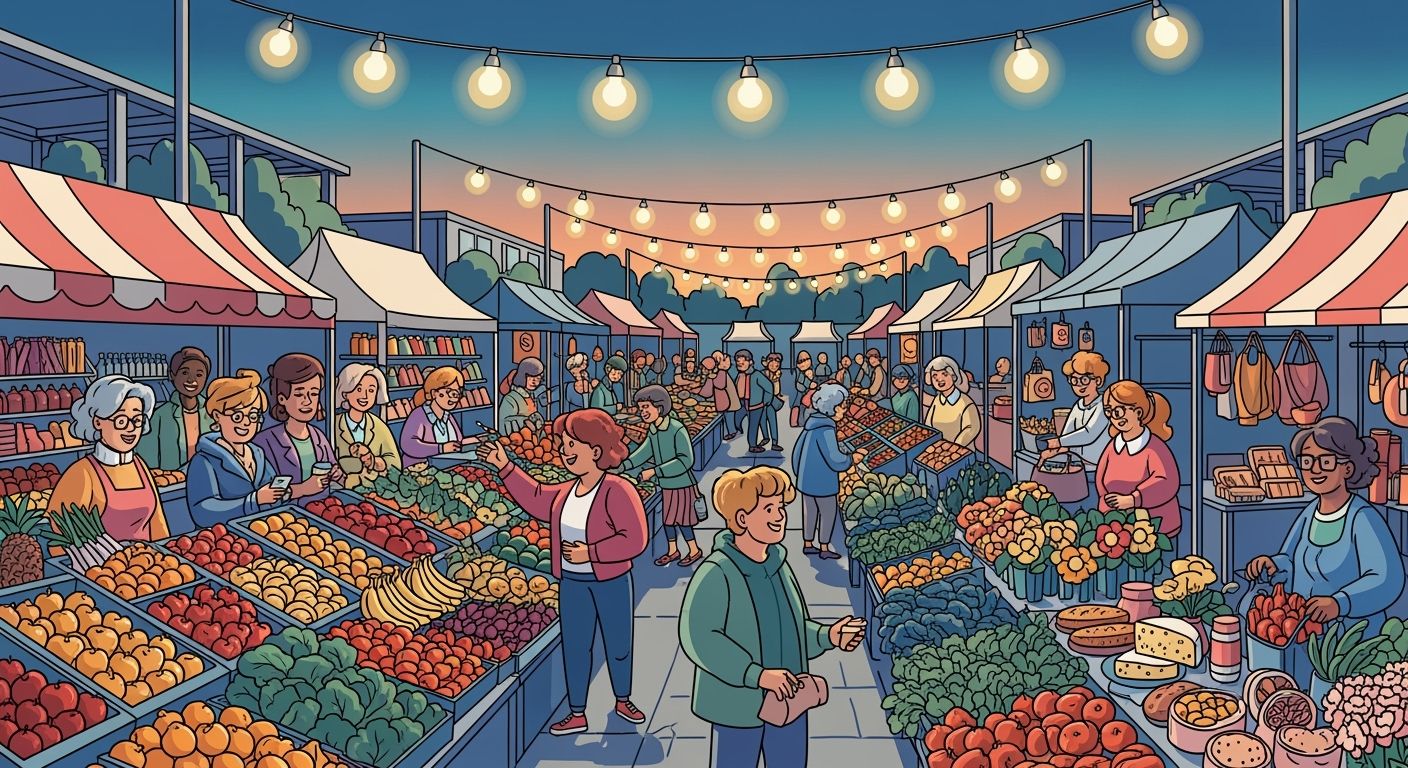
Open-air wholesale markets and trading centers require reliable outdoor lighting for overnight trading, vehicle circulation, loading, inspection, security, and pedestrian movement. These facilities often operate for long hours while trucks, forklifts, vendors, and buyers share the same circulation areas.
A single lighting configuration cannot serve every functional zone. Main trading aisles, loading bays, parking areas, entrances, perimeter roads, covered stalls, and storage zones have different illumination, glare-control, mounting, and maintenance requirements.
Effective lighting design combines LED luminaires, structurally suitable light poles, photometric calculations, electrical protection, emergency planning, and practical maintenance access. LeapPole provides configurable outdoor lighting and pole solutions for wholesale markets, logistics facilities, commercial yards, and other large outdoor sites.
Quick Answer
Lighting for an open-air wholesale market should be divided into functional zones. Main aisles need uniform roadway-style illumination, while loading areas require better vertical visibility and careful glare control around vehicles and workers. Parking, entrances, perimeter roads, and covered trading areas need separate configurations.
Pole height, spacing, luminaire power, optics, foundations, and controls should be selected through site-specific calculations. Buyers should provide project drawings, operating schedules, vehicle routes, quantities, local wind data, soil information, and applicable standards before requesting a final quotation.
Key Takeaways
- Divide the market into trading, loading, parking, access, perimeter, storage, and pedestrian zones before selecting products.
- Prioritize lighting uniformity and glare control instead of comparing luminaires only by wattage.
- Separate pedestrians, passenger vehicles, trucks, and material-handling equipment through coordinated lighting and traffic planning.
- Protect poles and electrical equipment from vehicle impact, water, dust, corrosion, and unauthorized access.
- Use photometric simulation to determine luminaire optics, pole height, spacing, and output.
- Consider grid, solar, backup power, and smart controls according to operating hours and site infrastructure.
- Plan maintenance access and spare parts before procurement, especially for markets that operate at night.
- Request complete technical documentation, drawings, photometric files, structural information, and delivery scope from suppliers.
Part1: Application Areas
1.1 Main Trading Aisles
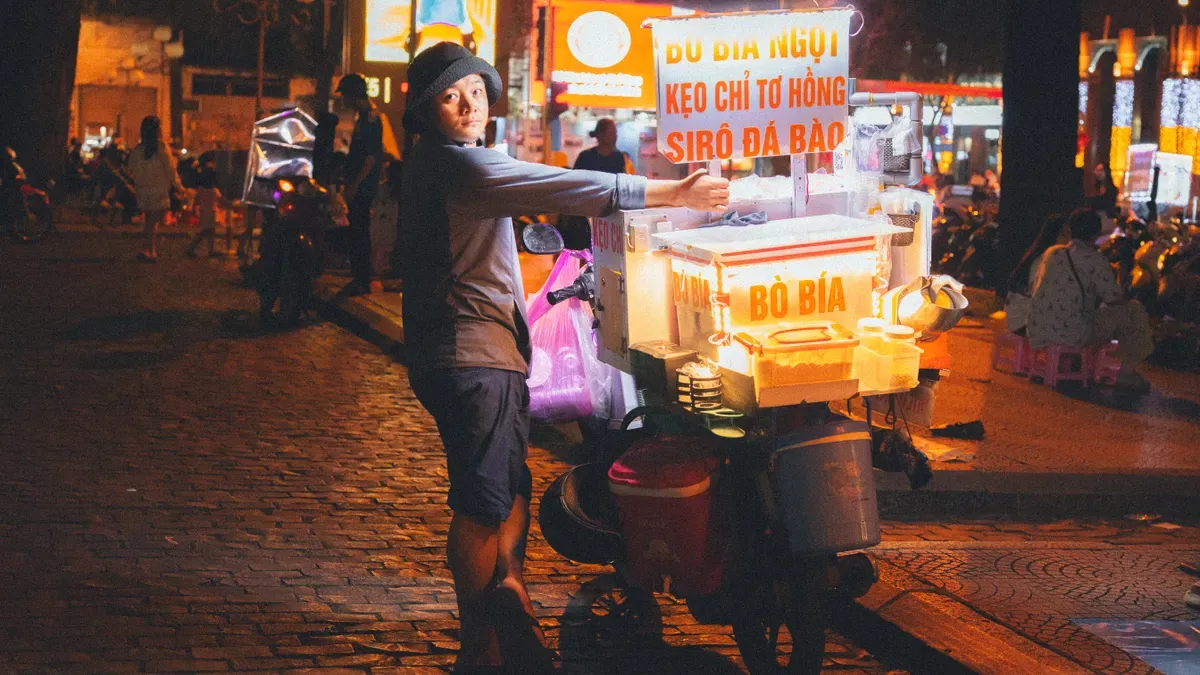
Main aisles carry pedestrians, carts, small vehicles, and sometimes delivery trucks. Lighting should provide continuous visual guidance and reveal obstacles, changes in pavement, signs, and crossing points.
Design considerations include:
- Aisle width
- Vehicle and pedestrian volume
- Operating hours
- Stall and canopy locations
- Trees, signs, and overhead obstructions
- Required vertical and horizontal illumination
- Camera locations
- Glare toward drivers and vendors
- Emergency routes
Uniformity is especially important. Alternating bright and dark areas make it harder for drivers and pedestrians to detect movement and obstacles. Photometric calculations should be used to compare optical distributions, mounting heights, and spacing.
1.2 Vendor Stalls and Covered Trading Areas
Lighting around vendor stalls should support product handling, payment, inspection, and pedestrian movement. Pole-mounted outdoor lighting may provide general illumination, while local task lighting is often required within individual stalls.
Covered halls or canopies may use weather-resistant linear fixtures or other suitable luminaires. High-bay luminaires are appropriate only when the mounting structure, ceiling height, and indoor or covered environment support that product type.
Project teams should coordinate:
- General area lighting
- Stall task lighting
- Color rendering
- Electrical outlets
- Canopy shadows
- Temporary wiring
- Fire and emergency requirements
- Cleaning and washdown conditions
Stall lighting should not create excessive brightness that reduces visibility in adjacent aisles.
1.3 Loading and Unloading Zones
Loading zones are among the highest-risk parts of a wholesale market. Trucks reverse, forklifts move between vehicles, and workers inspect or transfer goods under time pressure.
Lighting should help users identify:
- Dock edges
- Vehicle positions
- Workers and hand signals
- Pallets and goods
- Surface damage
- Ramps and level changes
- Barriers and bollards
- Traffic signs
- Emergency equipment
Vertical illumination can be important when workers need to see the sides or interiors of vehicles. Luminaires should be positioned to reduce glare in driver mirrors and avoid deep shadows between trucks.
For related design considerations, see LeapPole’s guide to lighting warehouses, loading bays, and logistics yards.
1.4 Parking and Internal Roads
Passenger parking, truck waiting areas, service roads, and internal intersections should be treated as separate zones. Their lighting requirements depend on vehicle type, speed, pedestrian activity, security needs, and camera coverage.
The layout should coordinate with:
- Entry and exit lanes
- Truck turning areas
- Pedestrian crossings
- Bus or taxi areas
- Accessible routes
- Security checkpoints
- Traffic signs and barriers
- CCTV cameras
- Landscaping
LED street lights with appropriate roadway optics can provide controlled distribution across parking rows and internal roads.
1.5 Entrances and Perimeter Areas
Entrances require clear identification of lanes, gates, guards, payment points, signs, pedestrians, and vehicles. Excessive light directed toward approaching drivers can reduce visibility rather than improve it.
Perimeter lighting should support security observation without creating glare for guards or cameras. Important considerations include:
- Fence lines
- Gates
- Guardhouses
- Approach roads
- Camera fields of view
- Adjacent properties
- Vegetation
- Restricted areas
- Emergency access
Motion controls may be appropriate for low-activity perimeter areas, but sudden changes in brightness should not interfere with surveillance or vehicle safety.
Part2: Lighting Performance Requirements
2.1 Illuminance and Uniformity
Required light levels depend on the task, traffic, risk, and governing standard. Loading zones, inspection points, and busy intersections may require different criteria from storage yards or perimeter roads.
Lighting calculations should assess:
- Maintained illuminance
- Minimum illuminance
- Uniformity
- Vertical illumination
- Glare
- Spill light
- Optical distribution
- Maintenance factor
- Obstructions
- Emergency conditions
The Illuminating Engineering Society and International Commission on Illumination publish relevant lighting guidance. Final requirements must be confirmed with the local authority and project consultant.
A lower nominal wattage does not necessarily mean inadequate lighting, and a higher wattage does not guarantee better performance. Luminaire efficacy, optics, mounting geometry, depreciation, and layout all affect the result.
2.2 Glare Control
Glare can affect truck drivers, forklift operators, vendors, pedestrians, guards, and camera systems. Poorly aimed floodlights and visible high-output LED sources are common causes.
Glare-control strategies include:
- Selecting suitable roadway or area-lighting optics
- Using shielded luminaires
- Avoiding excessive tilt
- Positioning poles outside critical driver sightlines
- Coordinating mounting height and output
- Using appropriate backlight, uplight, and glare performance
- Conducting nighttime aiming and visual checks
- Applying dimming schedules where appropriate
Color temperature should be selected according to task visibility, surrounding properties, camera performance, environmental requirements, and local specifications. It should not be based only on whether a space should feel “warm” or “cool.”
2.3 Color Rendering and Visual Identification
Color rendering may be important where users inspect produce, packaging, labels, vehicle markings, warning signs, or surface conditions.
The project specification should define:
- Color rendering index
- Color temperature
- Color consistency
- Allowable variation
- Luminaire depreciation
- Replacement compatibility
The highest available CRI is not automatically necessary for every outdoor zone. Requirements should match the visual task.
2.4 Camera Coordination
Security cameras need sufficient and reasonably uniform light, but excessive brightness can create overexposure and reduce image quality.
Lighting and CCTV teams should coordinate:
- Camera mounting height
- Field of view
- Facial or vehicle identification requirements
- Backlighting
- Headlight glare
- Pole shadows
- Infrared camera functions
- Flicker and driver compatibility
- Dimming schedules
- Emergency operating modes
Camera poles, luminaires, and mounting brackets should also be included in the structural load assessment.
2.5 Emergency and Backup Lighting
Emergency-lighting requirements depend on the jurisdiction, facility layout, building classification, and evacuation plan. A fixed backup duration should not be assumed for every international project.
The emergency strategy may include:
- Battery-backed exit signs
- Emergency luminaires in covered areas
- Generator-supported outdoor circuits
- Central battery systems
- Selected solar or standalone fixtures
- Illuminated assembly points
- Lighting for fire lanes and emergency gates
Local fire, electrical, occupational-safety, and building codes should determine the required duration, testing, documentation, and maintenance.
The NFPA and OSHA provide relevant information for projects governed by U.S. requirements.
Part3: Product Selection
3.1 LED Street and Area Lights
LED luminaires are commonly used because they provide controllable optics, long rated life, and compatibility with dimming and monitoring systems.
Buyers should compare:
- Delivered lumen output
- System efficacy
- Optical distribution
- Photometric files
- Glare performance
- Ingress and impact protection
- Surge protection
- Driver quality
- Thermal management
- Dimming compatibility
- Replaceable components
- Warranty conditions
Fixtures used in dusty, humid, corrosive, or washdown environments require suitable sealing and materials. Product selection should reflect the actual site rather than a generic outdoor rating.
3.2 Floodlights
Floodlights may be appropriate for loading yards, façades, security zones, or areas where roadway luminaires cannot provide the required distribution.
They should not be aimed broadly across the site without calculations. Incorrectly positioned floodlights can create glare, spill light, uneven coverage, and poor camera images.
Mounting brackets should allow controlled adjustment and resist movement under wind or vibration.
3.3 Light Poles
Pole selection depends on structural loads, mounting geometry, corrosion exposure, maintenance requirements, and appearance.
A pole specification should include:
- Material and grade
- Height and shaft dimensions
- Wall thickness
- Base-plate or direct-burial configuration
- Brackets
- Access doors
- Grounding
- Wind-load criteria
- Surface treatment
- Luminaire quantity and weight
- Camera or sensor loads
- Banner or sign loads
- Foundation interface
Steel street light poles provide high structural capacity and extensive customization options. Aluminum may be suitable where corrosion resistance and lower weight are priorities, but its structural and fatigue performance must still be evaluated.
A smart pole is not a separate structural material. Smart poles may use steel, aluminum, or another engineered construction depending on the project.
3.4 Solar Street Lights
Solar lighting may be suitable for perimeter roads, remote parking sections, temporary extensions, or areas where trenching is difficult. It should not automatically be assigned to every parking or entrance zone.
A solar system must be sized according to:
- Actual luminaire consumption
- Operating schedule
- Local solar irradiation
- Shading
- Required autonomy
- Battery temperature range
- Panel orientation
- Control strategy
- System losses
- Maintenance access
- Security and vandalism risks
Sites with continuous overnight operation or significant shading may require larger systems or grid-connected lighting. LeapPole’s solar lighting systems can be configured after reviewing project-specific energy and environmental data.
3.5 Smart Controls
Smart controls can support:
- Scheduled operation
- Dimming during low-activity periods
- Zone-based control
- Fault alerts
- Energy reporting
- Remote status monitoring
- Integration with market operating schedules
Controls should not reduce required light levels while loading, trading, cleaning, or security operations remain active.
Project owners should review communication protocols, software ownership, cybersecurity, manual override, replacement options, and long-term platform support.
Part4: Engineering & Installation

4.1 Photometric Design
Photometric simulation should be completed before finalizing luminaire quantity, pole height, spacing, or wattage.
The design model should include:
- Site dimensions
- Buildings and canopies
- Vehicle and pedestrian routes
- Parking layouts
- Loading zones
- Pole locations
- Mounting heights
- Luminaire photometric files
- Surface reflectance
- Maintenance factor
- Trees and large obstructions
Each functional zone should be evaluated separately. The final proposal should show the calculation grid, average and minimum values, uniformity, luminaire schedule, and pole layout.
4.2 Pole Height and Spacing
There is no universal spacing range for wholesale markets. Pole height and spacing depend on luminaire optics, required performance, obstructions, traffic, and structural constraints.
Higher mounting positions may cover larger areas but require stronger poles and foundations. Lower poles may reduce visual impact but normally require more fixtures and foundations.
The final configuration should be supported by both photometric and structural calculations.
4.3 Foundation and Soil Conditions
Foundation design should consider:
- Pole and equipment loads
- Overturning moment
- Soil bearing capacity
- Groundwater
- Drainage
- Frost depth
- Flood exposure
- Vehicle impact
- Finished pavement level
- Underground utilities
Loose soil does not simply mean that every foundation must be deeper and wider. The correct foundation should be determined through structural and geotechnical evaluation.
Anchor-bolt templates, conduit positions, reinforcement, base plates, and protective covers must be coordinated before concrete placement.
4.4 Wind Load and Additional Equipment
Wind-load calculations should include the complete installed configuration:
- Pole shaft
- Luminaires
- Brackets
- Cameras
- Solar panels
- Signs
- Sensors
- Antennas
- Decorative accessories
The effective projected area and mounting position of every component affect structural demand. Accessories added after installation may exceed the original design capacity.
4.5 Vehicle-Impact Protection
Open-air markets contain frequent truck and forklift movement. Poles located near loading or turning areas may need:
- Protective bollards
- Raised islands
- Guardrails
- Increased setback
- High-visibility markings
- Reinforced bases
- Alternative mounting locations
Bollards and barriers should be designed as separate impact-protection systems. A larger concrete foundation alone does not necessarily protect the pole from vehicle collision.
4.6 Electrical and Cable Planning
Electrical design should address:
- Distribution voltage
- Circuit loading
- Cable size
- Voltage drop
- Grounding
- Surge protection
- Control wiring
- Communication cables
- Conduit routing
- Junction boxes
- Water ingress
- Emergency circuits
Temporary vendor wiring should not be connected informally to street-lighting circuits. Trading stalls, refrigeration equipment, signs, and lighting should follow the approved electrical distribution design.
Part5: Standards, Inspection, and Quality Control
5.1 Applicable Requirements
Applicable standards depend on the project country, market layout, road authority, electrical system, and contract requirements.
The design team may need to consider requirements related to:
- Outdoor and roadway lighting
- Workplace safety
- Emergency lighting
- Electrical installations
- Structural supports
- Wind loading
- Ingress protection
- Energy performance
- Environmental light control
- Fire access
- Accessible routes
Organizations such as the IEC, IES, CIE, NFPA, and relevant national authorities publish standards or guidance. Not every standard applies to every project.
The tender documents should identify the governing requirements before suppliers prepare final configurations.
5.2 Pre-Shipment Inspection
Pre-shipment inspection may include:
- Product model and quantity
- Luminaire power and optics
- Driver and surge-protection devices
- Pole material and dimensions
- Welding quality
- Galvanizing or coating
- Access doors
- Brackets and mounting holes
- Anchor bolts and templates
- Electrical accessories
- Labels and documentation
- Protective packing
Photometric files, drawings, test reports, and inspection records should correspond to the products being shipped.
5.3 Installation Inspection
Installation checks should confirm:
- Foundation position
- Anchor-bolt alignment
- Pole verticality
- Fastener torque
- Luminaire orientation
- Electrical connections
- Grounding
- Cable sealing
- Control addressing
- Surface-finish damage
- Bollard or barrier placement
Any damaged galvanizing or coating should be repaired using an approved method.
5.4 Performance Acceptance
Acceptance testing should compare installed performance with the approved project design.
The process may include:
- Nighttime measurements
- Uniformity review
- Glare observations
- Camera-image checks
- Dimming tests
- Emergency operation
- Control-platform verification
- Visual inspection
- Documentation review
- Punch-list correction
Measurement locations and acceptance criteria should be agreed before testing.
Part6: Procurement and Maintenance
6.1 Information Required for Quotation
A supplier needs sufficient project information to prepare a reliable quotation. Buyers should provide:
- Site drawings
- Functional zoning
- Market operating hours
- Vehicle and pedestrian routes
- Required lighting criteria
- Pole locations or layout constraints
- Project location
- Wind and environmental conditions
- Soil information
- Power supply
- Control requirements
- Quantities
- Applicable standards
- Required documents
- Packing and delivery destination
- Project schedule
Incomplete information often produces quotations based on different assumptions, making price comparison unreliable.
6.2 Procurement Checklist
| Item | What to Confirm |
|---|---|
| Luminaires | Output, optics, efficacy, CCT, CRI, IP/IK rating, surge protection, driver, photometric files |
| Poles | Material, dimensions, wall thickness, wind load, brackets, access doors, surface treatment |
| Foundations | Base plate, anchor bolts, templates, conduit locations, structural interface |
| Controls | Dimming method, communication protocol, software access, manual override |
| Solar systems | Energy calculation, battery capacity, panel wattage, autonomy, temperature limits |
| Documentation | Drawings, calculations, test reports, inspection records, manuals |
| Logistics | Packing, labels, container loading, delivery scope |
| Support | Warranty, spare parts, technical support, replacement compatibility |
6.3 Maintenance Planning
Maintenance intervals should be based on environmental exposure, operating hours, product recommendations, accessibility, and site risk. A universal monthly or quarterly schedule is not appropriate for every project.
The maintenance plan should cover:
- Luminaire cleaning
- Pole and coating inspection
- Fasteners and brackets
- Electrical cabinets
- Grounding and surge protection
- Control-system faults
- Camera and sensor alignment
- Solar panels and batteries
- Vegetation obstruction
- Vehicle-impact damage
- Emergency systems
Markets operating overnight should plan maintenance during low-activity windows and keep safe temporary lighting available where required.
6.4 Spare Parts
Recommended spare parts may include:
- LED drivers
- LED modules where replaceable
- Surge-protection devices
- Control nodes
- Photocells
- Fuses and connectors
- Brackets and fasteners
- Access-door hardware
- Solar controllers
- Approved battery modules
The spare-parts list should reflect the quantity of installed equipment, lead times, warranty conditions, and component standardization.
6.5 LeapPole Project Support
LeapPole supports outdoor lighting projects with:
- Lighting-product selection
- Pole and bracket configuration
- Photometric coordination
- Structural design support
- Material and surface-treatment selection
- Foundation-interface drawings
- Manufacturing and quality control
- Protective packing
- Container-loading planning
- International delivery support
Final technical parameters should be based on the project drawings, operating requirements, calculations, local conditions, and applicable standards.
FAQ
How do you select the right light poles for a wholesale market?
Evaluate the site layout, luminaire quantity, mounting height, wind conditions, corrosion exposure, cameras, signs, and vehicle routes. Select pole material, dimensions, brackets, surface treatment, and foundations from the complete structural configuration.
How are pole height and spacing determined?
Pole height and spacing are established through photometric calculations and site constraints. Luminaire optics, required uniformity, aisle width, loading operations, canopies, camera locations, wind load, and maintenance access all affect the configuration.
Should every parking or perimeter area use solar street lights?
No. Solar lighting is suitable where solar exposure, operating schedule, battery autonomy, and maintenance conditions support it. Shaded locations or areas requiring high output throughout the night may be better served by grid-connected systems.
Which areas normally require the most careful glare control?
Loading zones, entrances, intersections, truck waiting areas, security checkpoints, and locations monitored by cameras require careful glare assessment. Luminaire optics, aiming, mounting height, and output should be coordinated with vehicle and camera sightlines.
What documents should buyers request before ordering?
Request technical datasheets, photometric files, pole drawings, structural information, material specifications, coating details, test reports, control information, foundation interfaces, packing plans, warranty terms, and a complete scope of supply.
How should emergency lighting be planned?
Emergency lighting should follow the local fire, electrical, building, and workplace-safety requirements. Define evacuation routes, exits, assembly points, backup power, operating duration, testing, and maintenance with the project consultant and local authority.
Can LeapPole customize a lighting system for different market zones?
Yes. LeapPole can configure LED luminaires, street light poles, brackets, solar systems, and control options according to the needs of trading aisles, loading areas, parking, access roads, and perimeter zones.
How can you request a technical evaluation?
Submit your project drawings, location, functional zones, operating hours, site conditions, quantities, standards, and tender specifications to LeapPole.
Ready to evaluate your wholesale market or trading-center lighting project? Contact LeapPole for a project-specific lighting and pole proposal.


